
Fairyland: Love and Legends at the National Portrait Gallery is a wondrous manifestation of the photographer’s “innate queerness”
Tim Walker photographs always offer escape to a fantasy world, so it feels right that his latest exhibition is named Fairyland. Walker explains the title in the exhibition catalogue: “As a young queer kid, I created a Fairyland in my head. A make-believe place I could escape to full of flowers and mythological creatures. You could be whatever you wanted to be in that place … that was really where I was gay.” Growing up in homophobic Seventies England, decorating his garden with shells and flowers, was “a queer escapade from society’s ‘NO’,” he says. “Luckily, I became a photographer and got to run away to Fairyland every day. All the stories I told were a manifestation of this innate Queerness.”


Walker’s images have propelled him to the top of fashion’s hierarchy, shooting for Vogue, Vanity Fair and W, publishing seven books and staging solo exhibitions worldwide. His analysis: “I’m owning the word ‘fairy’ because I was called a fairy at school, so I’m getting my revenge by creating this Fairyland.”
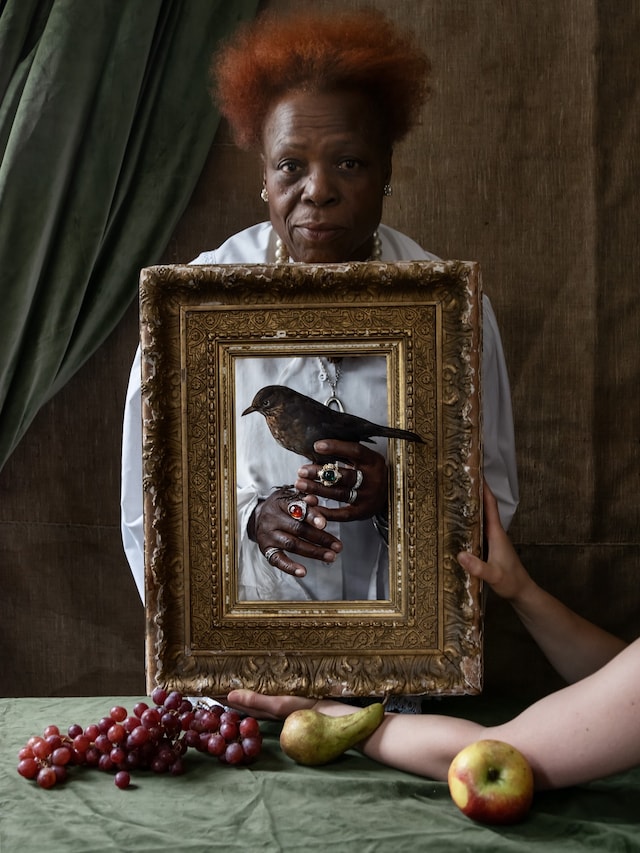
The show conveys a powerful message of love and community alongside allegorical aesthetics. For six years, Walker photographed 250 LGBTQ+ legends, shooting actor Ben Whishaw illuminated by a rainbow prism in 2020, and completing his final portrait – of Elton John, 22 days before the show opened. Some portraits and groups have Walkeresque costumes, set-dressing and fish-eye proportions, while others are stripped back and shot on white, Avedon-style (Walker assisted the photographer in his twenties).
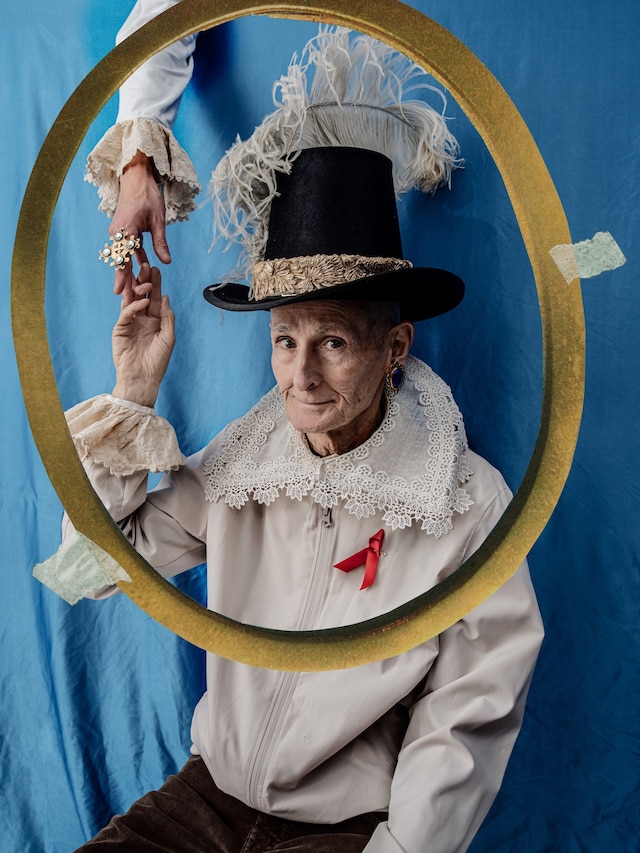
The exhibition’s narrative begins with Walker’s childhood and the genesis of the UK LGBTQ+ rights movement – Walker discovered he was born on the same day as the first gay rights march in 1970 – then moves through 50 years of activism and queer culture. Portraits of Seventies queer activists, who, the exhibition’s curator Susanna Brown says, “showed extraordinary bravery to fight for gay rights, not long after homosexuality was decriminalised in the UK”. These elder queer activists are garbed Holbein-style in Tudor robes, underlining their historical importance, as “the Queeristocracy”, to whom subsequent generations owe their freedom.

Brown describes how personal the exhibition is: “even the wall texts are written in Tim’s voice, as the standard third-person tone didn’t feel appropriate.” Interiors are designed by long-standing Walker collaborator, Shona Heath, with colours, lights and tiny prop fairies in bottles, making the exhibition as immersive as the worlds contained in Walker’s photographs.
A dedicated Aids epidemic room includes portraits of medics who cared for patients and musicians who soundtracked that era; Holly Johnson, Jimmy Sommerville and a cloaked Marc Almond, plus a poignant shot of an empty hospital bed wreathed in iridescent disco lights. “Within every fairytale, there’s darkness,” says Walker.
“I’ve rarely met anyone who loves people as much as Tim,“ says Brown. ”That’s key to his photography – his fascination with people.” (Walker describes how “photography is the greatest job in the world because it gives you permission to meet anyone.”)
 (after Nicholas Hilliard), London, 2023)
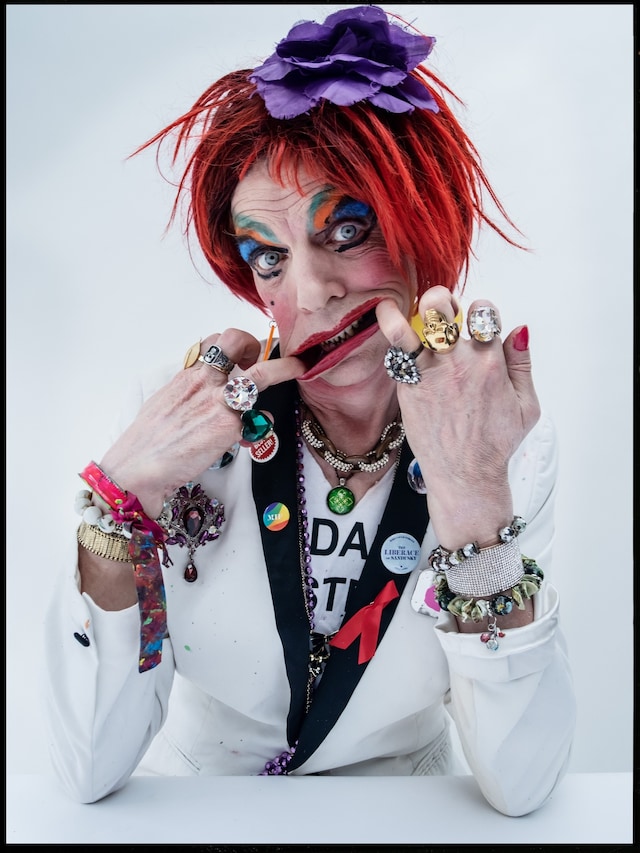
“He sees beauty everywhere,” continues Brown, ”making him extraordinary as a photographer. He doesn’t project his own ideas onto people he shoots – he finds out what makes them tick.” Writer and campaigner Shon Faye, who appears dressed in an ethereal fluffy white parka, was visited by Walker, who rummaged through her wardrobe for her portrait outfit. Performance artist David Hoyle remembers that Walker took him out “for a lovely healthy lunch in a café” before starting his portrait. “He was so lovely that I wanted to do my best for him. Tim directed me during the shoot. It wasn’t my idea to put my fingers in my mouth and pose like that – but he brought something out of me. I really liked the result.”
Various performers, from DJs such as Honey Dijon – reclining nude in a Grace Coddington-inspired red wig – to musicians, actors and entertainers are portrayed. There are erotic tableaux and nudes celebrating queer joy and the freedom to love and be loved.
David Hoyle explains what it means for his portrait to hang in the NPG: “I can’t believe it. I used to work on a cooked meat counter, and if somebody had told me then I’d end up here, I wouldn’t have believed them. It’s wonderful and very needed, at a time when some politicians are trying to set the clock back. People have fought for years for the rights we have … To be so visible in such a prestigious venue is wonderful and very timely. I’m very grateful to be part of it, and in such good company – very honoured.”


Walker is happy he’s now able to share Fairyland with the world: “Fairyland now exists as a real book and a place – a magical manifestation in the National Portrait Gallery. When I was growing up, gayness … was so hidden, culturally. For an exhibition of this nature to be in a museum in London would have been unimaginable,” he says. Reflecting on his hundreds of shoots, he concludes: “in the end, everything is about love. There are many different kinds of love and I hope the pictures open up conversations about love in all its forms.”
Tim Walker’s Fairyland: Love and Legends is at the National Portrait Gallery now until 7 February 2027. Fairyland also finds its way into an exclusive capsule collection, developed with designer Charles Jeffrey and artist Joe Sweeney. Shop here