)
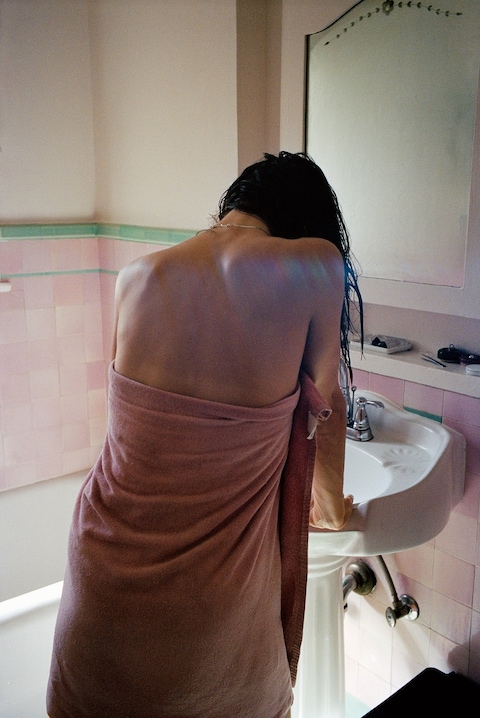
In his new book How About Never, photographer and skateboarder Jerry Hsu captures Los Angeles as a city of beauty, contradiction and unease
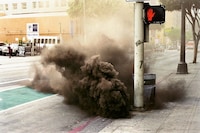
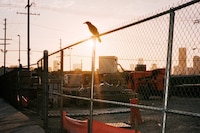
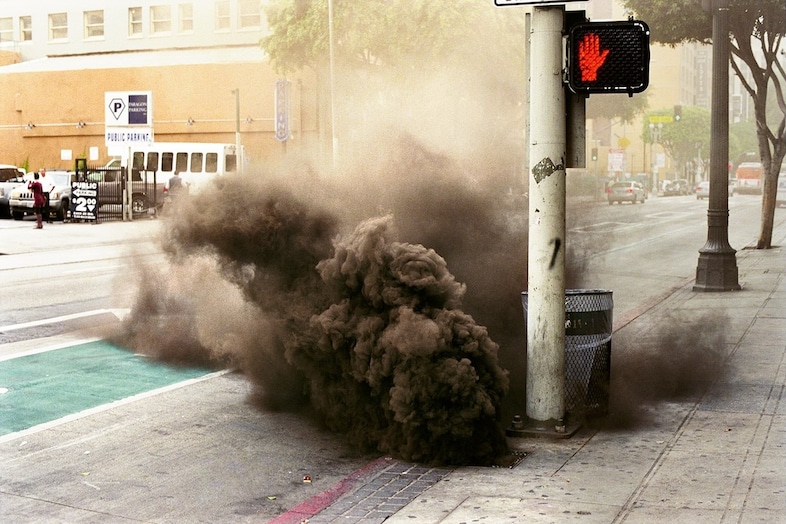
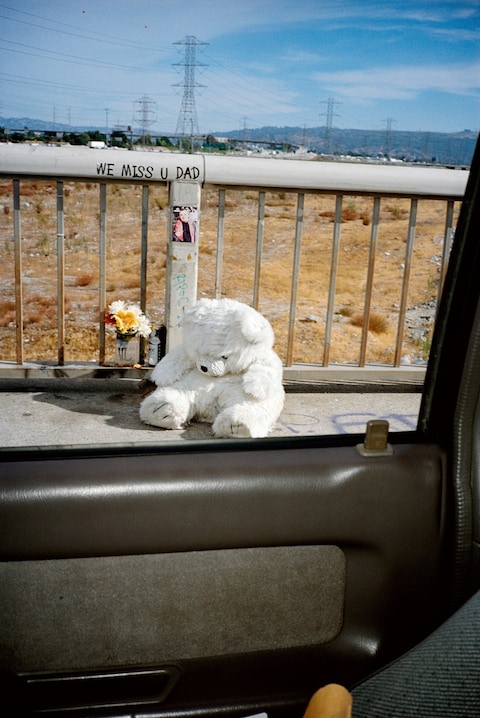
The world feels distinctly pre-dystopian right now. Maybe that creeping feeling has infiltrated my perception, because as I look through Jerry Hsu’s new photo book How About Never, I see harbingers of doom amid the beauty of his pictures – acrid-looking smoke billowing into a road; a lone bird (“one for sorrow”) perched on a chainlink fence, silhouetted by a majestic sunset; the bonnet of a burnt-out car which appears to be melting onto the pavement; a teddybear, slumped and abandoned on a roadside. But Hsu disagrees. “I would say the atmosphere of the book is more romantic and compassionate,” he says. “But that’s just me. I could be really wrong about that.”


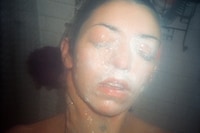
How About Never brings together images shot by Hsu in Los Angeles since 2011. With an eye for the humour, tragedy and beauty of the world as it unfolds around him, this blizzard of pictures creates a nuanced portrait of the city’s street life in a sequence of fragments – its uncanny coincidences and its random injustices as well as its sublime moments. While he insists he’s not intentionally invoking the underlying horror of the current political moment, he does acknowledge the pervading sense of something apocalyptic brewing. “Dystopia is more present than ever, it is just not evenly distributed,” he tells AnOther. “I live in America which maintains this fantasy of superiority, but right below that facade is a very fraught world. I’m not trying to have a dialogue about that though. I’m just using what’s happening in my environment to describe my inner world. Anything construed as dystopian may just be a default in what I am attracted to.”
Los Angeles itself – a city on a fault line – is its own kind of uncanny construction, equal measures utopian and dystopian. But Hsu didn’t want to invoke the ready-made cultural associations LA holds, often cropping out palm trees or identifying features that anchored the pictures too much in a caricature of the city. “There is this notion that LA is very glamorous. And maybe sometimes it is, but I was very uninterested in that. It might have pushed me to look in the other direction,” he explains. “This place is obviously a character in the book but I rarely, if ever, made reference to it consciously.”
)
As a skateboarder, Hsu has a different means of exploring the streets and a slightly altered relationship with the urban landscape than most. In a city of cars, skateboarders are much closer to the ground, and much more connected with the materiality of the streets – the steps, railings and surfaces. Also, their views of the city aren’t mediated by gazing out through a windscreen. “I guess as skateboarders we are so deeply immersed and dependent on our environment that we have no choice but to learn its geography and architecture. The need for something new never seems to go away so we search and search,” he says. “A side effect is this place actually keeps surprising me with what it has to offer.”
What Hsu has primarily learned about LA since he moved to the city aged 29 from his home town of San Jose, is that it’s unknowable. “I know I will never really know this city nor do I need to. It’s not even really a city – more of a vast region of regions. I am just endlessly curious about this place. It feels like I’ve barely scratched the surface, but I have no claim to it and certainly have no authority to talk that much about it. I basically just go about my business and look around when I can.”
)
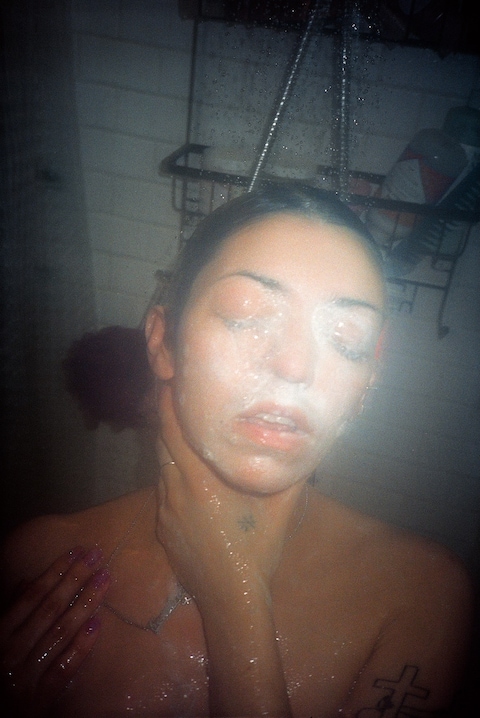
The narratives Hsu hopes emerge from the book are of “isolation, contradiction, being in love, heartbreak and hope”. But, aside from engaging with these elements and describing the life of the city as he experiences it from his skateboarder’s-eye-view, How About Never is also impregnated with a very personal autobiographical story. The pictures span the duration of his relationship with his now-ex-wife, from when they moved to LA when they first started dating through to their eventual divorce. “All the work in the book was made while we were falling in love to falling out of it,” he says. While the images aren’t explicitly tracing the trajectory of this love story, it’s a powerful element in Hsu’s life which was running concurrently with its production. “In the final year of making this work my marriage ended. The emotions, confusion and grief of that experience were happening in real time as I completed the edit,” he recalls. “But the book is not about a divorce, it reflects an entire relationship – one that was successful and worth having.”
)
Finally, perhaps still with dystopia on my mind, I suggest many of the pictures depict moments when something is about to happen (a leaping cat is about to land, a lightbulb in a microwave is about to explode). Or something has just happened (a building has caught fire, a car has overturned) but it isn’t resolved. There’s a sense of anticipation and foreboding. “A theme in this work is transformation and what must be endured to achieve it,” he says. “Many of the more chaotic or energised imagery are proxies for emotional pain and contradiction. I have no other way to describe it.” I wonder if the images are functioning for us both as a Rorschach test might. Hsu ponders. “Maybe I’m having a crisis?”